A consular return lawyer helps when a U.S. embassy or consulate sends an approved petition back to USCIS after a visa interview. This can be confusing and stressful. The family or employer may think the case was already approved, yet the consular officer may see a problem serious enough to question the petition.
A consular return is different from a normal document request. In many visa cases, the officer may ask for missing papers, administrative processing, or additional proof. However, when the embassy returns the petition to USCIS, the case may move into a much more serious stage.
The issue may involve marriage evidence, employment eligibility, criminal history, public charge concerns, fraud concerns, prior immigration violations, or facts that changed after the petition was approved. Because of that, the next steps should be careful, organized, and strategic.
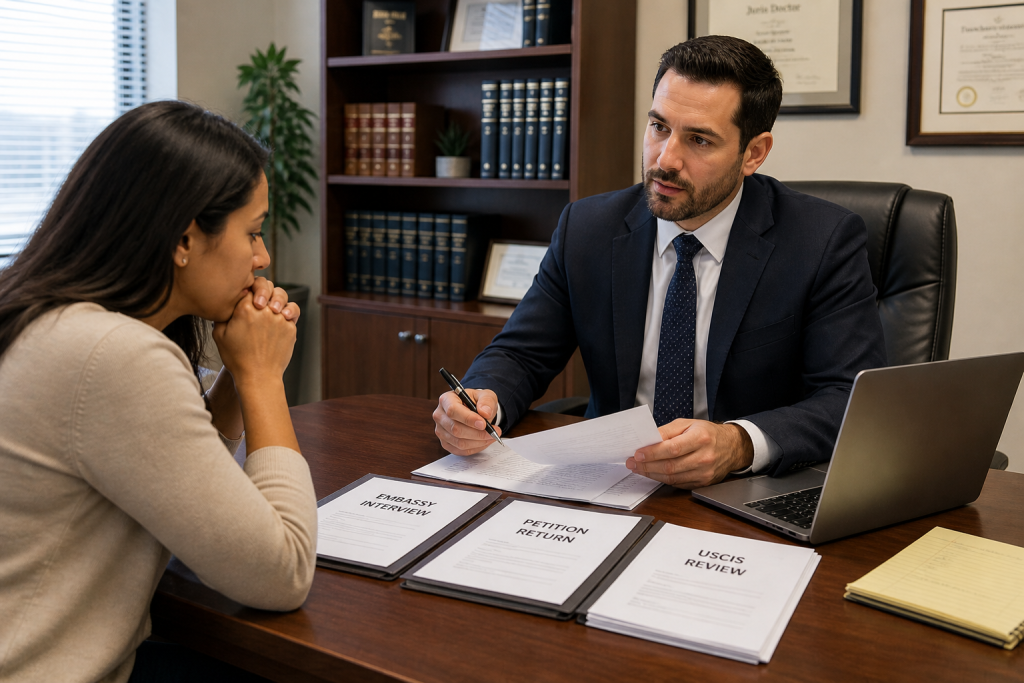
What a Consular Return Lawyer Reviews First
A consular return lawyer first reviews what happened at the visa interview. The interview often gives important clues. The officer may have asked detailed questions about the relationship, the job offer, the petitioner, the applicant’s immigration history, or documents submitted earlier in the case.
The review should include the original petition, approval notice, NVC submissions, civil documents, financial evidence, interview notice, refusal sheet, embassy emails, and any written instructions from the consulate. If the case is still at the National Visa Center stage rather than after the embassy interview, our NVC lawyer guide explains CEAC fees, DS-260 issues, document uploads, and documentarily qualified status.
If the applicant received a 221(g) notice, that document may show whether the consulate wanted more evidence, administrative processing, or another action.
The lawyer should also compare the petition file with the interview facts. Sometimes the petition was approved based on one version of the facts, but the interview created doubts. For example, the applicant’s answers may conflict with the petition, prior forms, social media, travel records, employment documents, or relationship evidence.
The goal is to identify the consulate’s concern before USCIS takes action. A weak or rushed response can make the record worse.
What Does It Mean When an Embassy Returns a Case to USCIS?
When an embassy returns a case to USCIS, the consular officer is usually asking USCIS to review the approved petition again. This does not always mean USCIS will revoke the petition. However, it means the consulate found a concern that it believed USCIS should review.
USCIS explains that an approved immigrant visa petition may be revoked by an officer authorized to approve that type of petition. Its page on immigrant visa petitions returned by State Department consular offices discusses what may happen after a consular office sends a petition back.
In simple terms, the case may move from the consulate back into a USCIS review process. USCIS may reaffirm the petition, issue a Notice of Intent to Revoke, or take another action depending on the facts.
This is why families and employers should not assume the case is over. At the same time, they should not ignore the problem. A consular return may create a chance to defend the petition before USCIS makes a final decision.
How a Consular Return Differs From 221(g)
Many applicants first see a refusal under section 221(g). That can create confusion because not every 221(g) refusal means the petition has been returned to USCIS.
The U.S. Department of State explains on its administrative processing information page that a 221(g) refusal can happen when the consular officer needs more information or further administrative processing before deciding eligibility.
In some cases, the applicant only needs to upload documents, submit a passport, provide an updated financial form, or wait for administrative processing. In other cases, the consulate may decide that the approved petition itself has a problem.
That difference matters. A document request usually stays with the consulate. A consular return may send the petition back to USCIS for review. For broader context on temporary consular refusals, document requests, and administrative processing, see our guide to a 221g visa lawyer.
Therefore, the applicant should read the refusal notice carefully and keep every embassy message.
Why an Embassy May Return a Petition
A consulate may return a petition for several reasons. Family-based cases often raise questions about whether the marriage is real, whether a parent-child relationship qualifies, or whether the petitioner and beneficiary gave consistent answers.
Employment-based cases can create different concerns. The officer may question the job offer, the employer’s ability to pay, the applicant’s qualifications, worksite details, or whether the position still exists. Sometimes, the officer may also believe that key facts changed after USCIS approved the petition.
Fraud concerns can also trigger a return. The officer may question documents, interview answers, prior immigration history, or inconsistencies between different filings. Sometimes the concern comes from one unclear answer. Other times, the record shows several conflicts.
However, not every concern is correct. A consular officer may misunderstand the facts, place too much weight on a small inconsistency, or lack context. That is why a careful record matters.
What Happens After USCIS Receives the Returned Petition?
After USCIS receives the returned petition, the agency may review the consulate’s concerns and compare them with the original petition record. USCIS may decide that the petition remains valid. If so, it may reaffirm the approval and send the case back to the Department of State.
However, USCIS may also issue a Notice of Intent to Revoke, often called a NOIR. A NOIR gives the petitioner a chance to respond before USCIS revokes the approval.
This stage is important because the petitioner, not only the visa applicant, may need to act. In a family case, the U.S. citizen or lawful permanent resident petitioner may need to provide more relationship evidence. In an employment case, the employer may need to address job-related questions.
A consular return lawyer can help organize the response around the exact reason USCIS may question the petition. The response should not simply repeat the original filing. It should answer the new concerns directly.
How a Consular Return Lawyer Responds to a NOIR
A NOIR response should be focused. First, the petitioner must identify the specific issues USCIS raised. Then the response should provide evidence, legal explanation, and a clear timeline.
In a marriage case, useful evidence may include joint financial records, photos, travel records, lease documents, insurance documents, communication history, affidavits, and proof of shared life. However, the evidence should match the concern. If the problem came from inconsistent interview answers, the response should explain those answers directly.
In an employment case, the response may include business records, payroll documents, tax records, job descriptions, worksite evidence, professional credentials, and proof that the job remains available.
The tone should stay credible. A strong response does not attack the officer. Instead, it explains the facts, corrects misunderstandings, and supports the petition with documents.
Common Mistakes After a Case Is Returned
One common mistake is waiting too long. Petitioners sometimes assume the embassy will contact them again soon. However, the file may take time to move between agencies. During that period, the family or employer should preserve documents and prepare.
Another mistake is sending random evidence without a plan. More documents do not always mean a stronger case. If the response does not address the specific concern, USCIS may still decide to revoke the petition.
Some applicants also try to refile too quickly. A new petition may help in some cases, but it can also create problems if it contradicts the earlier record. Before refiling, the petitioner should understand why the first case was returned.
Finally, applicants should avoid giving new explanations that conflict with prior forms or interview answers. Consistency matters. If the story changes, the case may look weaker.
Consular Return in Marriage-Based Cases
Marriage-based cases often receive close review at the consular stage. The officer may ask how the couple met, when the relationship became serious, who attended the wedding, how the couple communicates, and what future plans they have.
If the answers seem inconsistent, the officer may suspect that the marriage was entered into for immigration purposes. That is a serious concern. A returned petition can place the entire I-130 approval at risk. For couples still preparing the initial relationship evidence, our I-130 lawyer guide explains marriage petition documents, RFEs, and consistency problems.
A consular return lawyer can help the couple organize a relationship timeline, identify interview misunderstandings, and gather evidence that shows a real marriage. The response should explain the couple’s history in a clear way.
This does not mean every inconsistency is fatal. People forget dates, become nervous, or misunderstand questions. However, the explanation should be credible and supported by documents when possible.
Consular Return in Employment-Based Cases
Employment-based consular returns can involve different issues. The officer may question whether the employer still intends to hire the applicant, whether the job matches the petition, or whether the applicant qualifies for the position.
For example, the consulate may notice a change in job duties, work location, salary, employer structure, or business operations. The officer may also question whether the applicant’s education or experience matches the approved petition.
In these cases, the employer’s role is central. The employer may need to provide updated records and explain any changes. If the original petition no longer matches the real job, the case may need a different strategy.
A consular return lawyer can help determine whether the case can be defended, whether a new filing is safer, or whether another immigration option may fit better.
When Refiling May Be Better Than Fighting the Return
Sometimes the best response is to defend the existing petition. Other times, a new petition may make more sense. This depends on the facts.
Refiling may help if the original petition had weak evidence, outdated information, or correctable mistakes. For example, a couple may now have stronger marriage evidence. An employer may now have clearer business records or a more accurate job description.
However, refiling does not erase the old record. USCIS and the consulate may still review prior answers, documents, and interview notes. Therefore, a new case should address the old problem instead of pretending it never happened.
Before refiling, the petitioner should understand the risk of inconsistent information. A careful strategy can prevent the second filing from creating even more questions.
How to Prepare While Waiting for USCIS Action
The waiting period after a consular return can feel uncertain. Still, the petitioner and applicant can use that time well.
They should collect every embassy notice, CEAC update, email, petition receipt, approval notice, and interview-related document. They should also write down what happened at the interview while the memory is fresh.
In a family case, the couple should continue preserving proof of the relationship. In an employment case, the employer should preserve records showing that the job remains real and available.
If a NOIR arrives later, the response deadline may be short. Preparing early can make the difference between a rushed response and a well-documented one.
How a Consular Return Lawyer Builds the Strategy
A consular return lawyer builds the strategy around the record. First, the lawyer identifies whether the case remains at the embassy, sits in administrative processing, or has moved back to USCIS. Then the lawyer reviews the petition, interview issues, and possible grounds for return.
Next, the lawyer decides whether to wait, inquire, supplement the record, prepare for a NOIR, or consider refiling. The right answer depends on the visa category and the reason for the return.
The strongest strategy usually does three things. It explains the facts clearly. It answers the government’s concerns directly. Finally, it avoids new inconsistencies.
This approach is especially important because a consular return can affect more than one application. It can shape how USCIS and the consulate view future filings from the same petitioner or applicant.
Conclusion
A case returned from an embassy to USCIS can be serious, but it does not always mean the petition is lost. The next step depends on what the consulate questioned, what USCIS does after review, and whether the petitioner can answer the concern with credible evidence.
A consular return lawyer can help families, employers, and applicants understand the difference between a normal 221(g) request and a petition return. The lawyer can also help prepare for a possible NOIR, organize evidence, and decide whether defending the petition or refiling makes more sense.
The key is not to panic and not to guess. A returned petition needs a clear record, a careful explanation, and a strategy that matches the real issue in the case.
Disclaimer: This page provides general information, not legal advice. Immigration rules and procedures change. Always rely on current instructions from USCIS and the U.S. Department of State (linked above) and consult a qualified attorney about your specific situation.
Leave a Reply