A DS-260 mistake discovered after submission can create uncertainty during the immigrant visa process. Form DS-260 is the online immigrant visa application completed through the Consular Electronic Application Center (CEAC). Once submitted, applicants cannot simply reopen the form and change their answers.
Fortunately, errors can sometimes be corrected with assistance from the National Visa Center (NVC) or the U.S. embassy or consulate handling the case.
The correct procedure depends on the type of mistake and the stage of processing. This guide explains how to correct a submitted DS-260, when reopening may be possible, and what applicants should do before their immigrant visa interview.
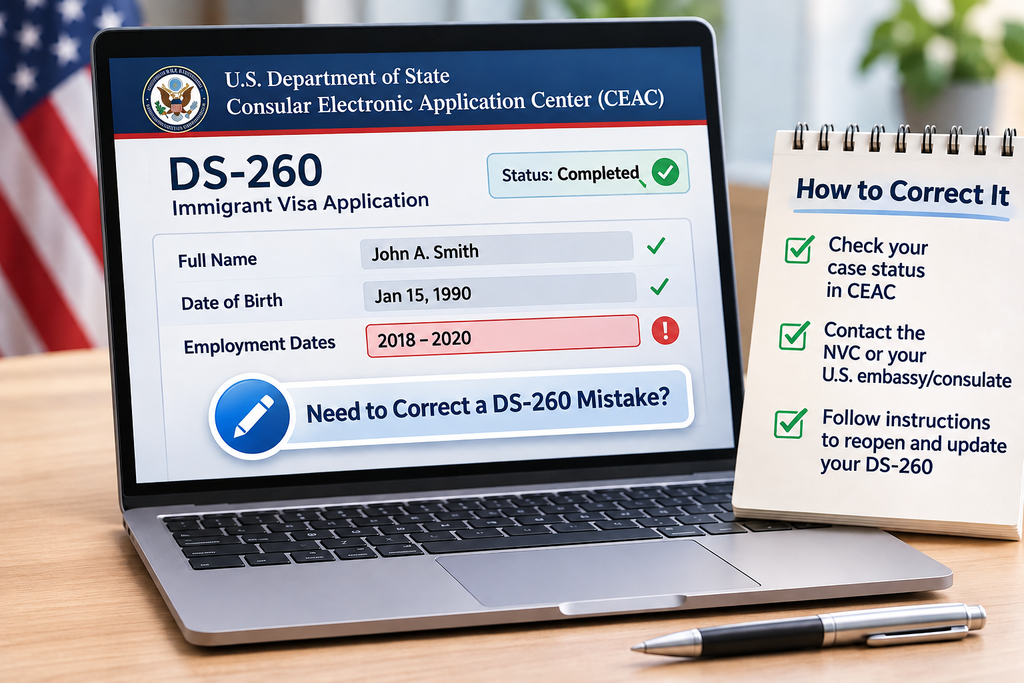
Can You Correct a DS-260 After Submission?
Yes, but a submitted DS-260 cannot normally be edited independently.
Before submission, applicants can save their information, return to an incomplete application, and revise their answers. However, clicking the final submission button changes the application’s status.
According to the Department of State’s DS-260 FAQs, applicants cannot regain access to a submitted application without assistance from the NVC, the Kentucky Consular Center in Diversity Visa cases, or the relevant U.S. embassy or consulate.
The Department of State’s CEAC guidance also identifies a “Re-opened” status. This means the responsible government office has enabled corrections to a previously submitted application.
Therefore, discovering an error does not automatically require starting a new immigrant visa application.
Common DS-260 Mistakes That May Require Correction
Errors can affect different parts of the application. Some involve ordinary personal information, while others concern facts relevant to immigration eligibility.
Incorrect Personal Information
Common mistakes include:
- Misspelled names or incorrect dates of birth.
- Incorrect passport information.
- Missing previous names.
- Inaccurate residential addresses.
- Incorrect employment or education dates.
Applicants should compare their DS-260 answers with passports, birth certificates, marriage records, and other official documents.
Even a seemingly minor discrepancy may require clarification when it conflicts with evidence submitted during visa processing.
Missing Immigration History
A more serious DS-260 mistake may involve incorrect information about previous U.S. travel, visa refusals, immigration violations, or removal proceedings.
These questions can affect how a consular officer evaluates the application.
Applicants should not assume that an incorrect answer is harmless. However, an accidental error does not automatically establish fraud or willful misrepresentation.
The circumstances, the information omitted, and the applicable legal requirements determine the significance of a particular mistake.
Incorrect Family Information
Applicants may also discover errors involving previous marriages, children, or other family relationships.
For example, an applicant might accidentally omit a child or provide an incorrect marriage termination date.
Such issues deserve careful attention because family information can affect eligibility, derivative beneficiaries, and the documents required during processing.
How to Correct a DS-260 Mistake at the NVC Stage
The first step is to identify which government agency currently handles the application.
Step 1: Check Your CEAC Case Status
Log into CEAC using your NVC case number and invoice ID.
Review the immigrant visa application status.
The Department of State’s CEAC FAQs explain the difference between incomplete, completed, and reopened applications.
If the application is incomplete, you can normally continue editing it.
If its status indicates completion, however, further changes require assistance from the responsible government office.
Also check the case location. CEAC identifies whether the case remains at the NVC or has been transferred to an embassy or consulate.
Step 2: Contact the NVC if the Case Remains There
If the NVC still handles the case, explain the error using the official NVC Public Inquiry Form.
Include the identifying information requested by the form and describe the mistake precisely.
A useful explanation identifies:
- The relevant DS-260 question or section.
- The incorrect answer originally submitted.
- The accurate information.
- The reason a correction is necessary.
For example, if an applicant entered the wrong employment dates, the inquiry should identify both the incorrect and correct dates.
The NVC can then determine whether reopening the application is appropriate.
Step 3: Follow the Instructions You Receive
Do not assume that submitting an inquiry automatically unlocks the DS-260.
Wait for instructions from the NVC and check CEAC for changes to the application’s status.
If the agency reopens the form, review the relevant answers carefully, make the authorized corrections, and follow the instructions for resubmission.
Keep copies of important correspondence and the corrected information for future reference.
What if Your Case Is Already Documentarily Qualified?
A DS-260 correction becomes more complicated after the NVC has determined that the case is documentarily complete, often called documentarily qualified (DQ).
At that stage, the required application and supporting documents have passed the NVC’s initial review. The case may be awaiting an immigrant visa interview.
Reopening a completed application can potentially affect its processing status.
In published guidance from June 2022, the Department of State explained that reopening a DS-260 after documentarily complete status could result in a new documentarily complete date and affect interview scheduling.
The Department instead described procedures for informing the consular post about updates once an interview has been scheduled.
Consequently, applicants should not automatically request reopening for every minor change after becoming documentarily qualified.
However, important inaccuracies should still be disclosed and addressed. The correct response depends on the significance of the information and the instructions of the responsible office.
For more information about this processing stage, see our NVC guide to CEAC fees and documentarily qualified status.
Correcting a DS-260 After Interview Scheduling
If the case has already been transferred to a U.S. embassy or consulate, the consular post generally becomes the appropriate point of contact.
Applicants should follow the specific embassy’s instructions for reporting corrections.
Depending on the circumstances, the consular post may permit the DS-260 to be reopened before the interview or address the information during the interview process.
Do not assume every embassy follows an identical procedure or that reopening is guaranteed.
If the form remains locked, prepare an accurate explanation and any supporting documents needed to clarify the discrepancy.
The Department of State’s immigrant visa interview guidance explains how consular officers review visa applications and supporting evidence.
Applicants should provide truthful and complete information throughout this process.
What if Your Information Changed After Submission?
Not every difference between a submitted DS-260 and current circumstances represents an original mistake.
Immigrant visa processing can take considerable time. During that period, an applicant may change jobs, move to a new address, marry, divorce, or have a child.
These developments can make information in the original application outdated even when it was accurate when submitted.
The appropriate action depends on the change.
For example, an updated email address may be handled through CEAC contact settings while the case is at the NVC. A change involving marital status or a new family member may require additional documentation or case updates.
Likewise, the procedure for correcting an immigrant visa application differs from correcting an underlying petition filed with U.S. Citizenship and Immigration Services (USCIS).
If the issue concerns the original family petition rather than DS-260 answers, review the applicable USCIS Form I-130 guidance.
The important distinction is between correcting a previously inaccurate answer and reporting a genuine change that occurred afterward.
Can a DS-260 Mistake Cause Visa Refusal?
A DS-260 mistake does not automatically result in visa refusal.
Nevertheless, inaccurate or incomplete information can raise questions during document review or the consular interview.
The consequences depend on the nature of the discrepancy.
A minor typographical error may be resolved through clarification. In contrast, incorrect information involving immigration history, criminal matters, or material facts could require additional legal analysis.
Applicants should never intentionally conceal relevant information or provide another inaccurate answer to compensate for an earlier mistake.
Where the discrepancy may affect admissibility or involve possible misrepresentation, consulting a qualified immigration attorney before the interview is particularly important.
Our consular processing guide explains the broader immigrant visa process and the role of the consular interview.
Common Mistakes When Requesting DS-260 Corrections
Applicants should avoid several preventable problems:
- Assuming that the submitted form can be edited without government assistance.
- Contacting USCIS about a DS-260 error when the Department of State already handles the case.
- Requesting reopening without considering the case’s documentarily qualified status.
- Sending repeated inquiries without waiting for the responsible office’s instructions.
- Failing to disclose important corrections or changes during the interview.
Preparing a clear explanation and identifying the correct office can make the process more manageable.
Frequently Asked Questions
Can I unlock my DS-260 myself?
No. Once submitted, the DS-260 cannot normally be reopened by the applicant. The NVC or relevant consular office must provide assistance.
Do I need to submit a new DS-260 if I made a mistake?
Not necessarily. The responsible government office may authorize corrections to the existing application. Follow its instructions rather than independently attempting to create a replacement.
Will correcting my DS-260 delay my interview?
It may. In particular, reopening a documentarily complete case can affect processing and scheduling. However, the effect depends on the case stage and the action taken by the government.
Can I correct my DS-260 during the visa interview?
Consular officers can address outdated or inaccurate information during the interview and may authorize corrections when appropriate. Nevertheless, applicants should follow any instructions to report significant changes beforehand.
What if I discover a DS-260 mistake after submitting my documents?
Check whether the case remains at the NVC or has moved to the embassy. Contact the responsible office, explain the discrepancy accurately, and follow the applicable correction procedure.
Conclusion
A DS-260 mistake after submission does not necessarily require a new visa application. However, correcting the form usually requires assistance from the NVC or the U.S. embassy or consulate.
Applicants should first identify the case’s processing stage and the significance of the error.
If the case remains at the NVC, an inquiry may be appropriate. If it is documentarily qualified or scheduled for an interview, follow the instructions of the responsible office before requesting changes.
Accurate disclosure and careful preparation are essential throughout the immigrant visa process.
Disclaimer: This page provides general information, not legal advice. Immigration rules and procedures change. Always rely on current instructions from USCIS and the U.S. Department of State (linked above) and consult a qualified attorney about your specific situation.
Leave a Reply