An unlawful presence waiver lawyer helps people understand whether time spent in the United States without lawful status may trigger the 3-year bar or 10-year bar after departure. This issue often comes up when someone plans consular processing for a green card, but worries that leaving the United States could create a serious inadmissibility problem.
Unlawful presence can be confusing because the problem may not fully appear until the person leaves the United States. Someone may live in the U.S. for years, start a family, and later qualify for an immigrant visa through a spouse, parent, child, or employer. However, the act of departing for a consular interview can trigger the unlawful presence bar if the person has already accumulated enough unlawful presence.
That is why timing matters. Before leaving the United States, the applicant should understand the immigration history, the amount of unlawful presence, the available waiver options, and whether Form I-601A or Form I-601 may apply.
What an Unlawful Presence Waiver Lawyer Reviews First
An unlawful presence waiver lawyer usually starts with a complete timeline. The timeline should include every entry into the United States, every exit, visa expiration dates, I-94 records, immigration filings, removal history, and any period when the person may have stayed without lawful status.
This review matters because not every immigration violation works the same way. For example, overstaying a visa, falling out of status, entering without inspection, and leaving after a removal order can create different legal problems. Some people also have more than one issue at the same time.
The lawyer will also review whether the person has a qualifying relative for a waiver. In many unlawful presence waiver cases, hardship to a U.S. citizen or lawful permanent resident spouse or parent becomes central. However, the case should begin with the inadmissibility ground itself. The hardship argument comes later.
If the facts involve several inadmissibility issues, our waiver of inadmissibility lawyer guide explains how I-601 and I-601A waivers can fit into broader family immigration cases.
What Is Unlawful Presence?
Unlawful presence generally refers to time spent in the United States without authorization after a person’s permitted stay ends, or time spent in the country without being admitted or paroled. USCIS explains the basic concept on its unlawful presence and inadmissibility page.
This may sound simple, but the details can be technical. A person’s I-94, visa type, age, pending applications, asylum history, DACA history, removal history, or prior immigration decisions can affect the analysis.
For example, a visa stamp in the passport does not always control how long a person may stay. The I-94 usually matters more for the authorized period of stay. Also, some people may stop maintaining status before they realize it, especially if they work without permission, stop studying, or violate visa conditions.
Because the consequences can be serious, applicants should not estimate unlawful presence casually. A small timeline mistake can lead to the wrong waiver strategy.
How an Unlawful Presence Waiver Lawyer Explains the 3-Year and 10-Year Bars
The 3-year and 10-year bars are two of the most common unlawful presence problems. The U.S. Department of State lists prior unlawful presence under INA 212(a)(9)(B)(i) on its visa denials page.
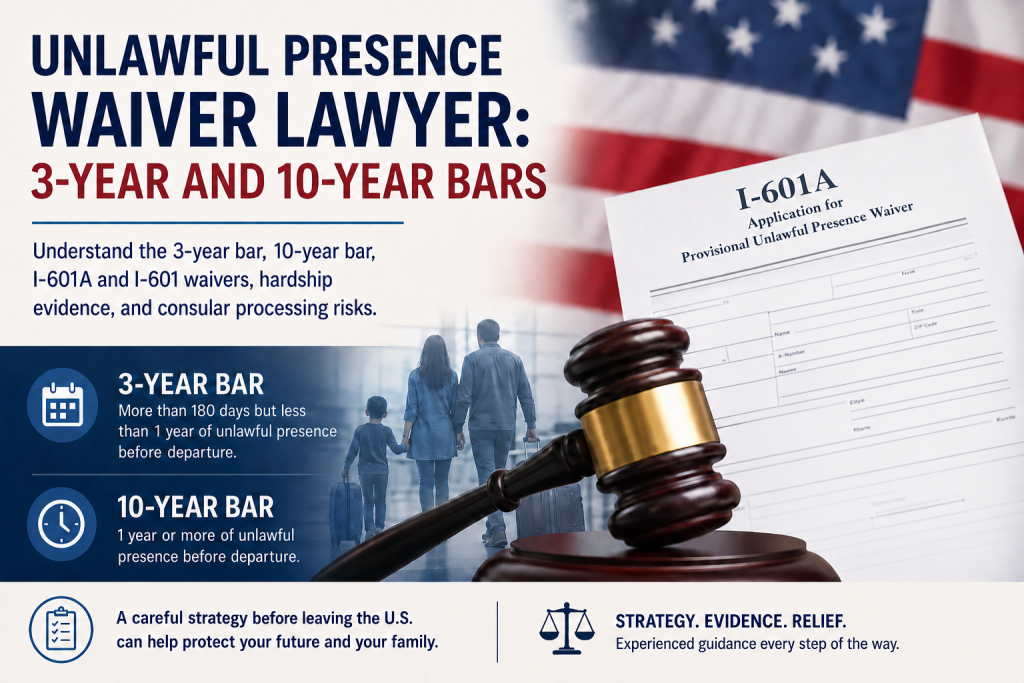
In general, the 3-year bar may apply when a person accumulates more than 180 days but less than one year of unlawful presence and then departs the United States. The 10-year bar may apply when a person accumulates one year or more of unlawful presence and then departs.
The departure is key. Many people do not understand this. They may qualify for a family petition and assume the next step is simply attending an immigrant visa interview abroad. However, leaving the United States can activate the bar if the person has enough unlawful presence.
A strong strategy starts before departure. Once the person leaves and triggers the bar, the case may become harder, slower, and more stressful for the family.
Why Departure From the United States Matters
Departure matters because unlawful presence bars usually become active after the person leaves the United States. This is especially important in consular processing cases.
For example, a person may have an approved I-130 petition through a U.S. citizen spouse. The National Visa Center may process the case. The applicant may receive instructions to attend a consular interview abroad. But if the applicant leaves the U.S. without first addressing unlawful presence, the consular officer may refuse the immigrant visa because of the 3-year or 10-year bar.
That is why consular planning must include an inadmissibility review before travel. Our consular processing lawyer guide explains the broader immigrant visa process, including how USCIS, NVC, and the U.S. embassy or consulate fit together.
An unlawful presence waiver lawyer can help the applicant decide whether a provisional waiver should be filed before departure, whether another inadmissibility issue exists, or whether leaving the United States would create risks that the family has not yet considered.
How an Unlawful Presence Waiver Lawyer Reviews I-601A vs. I-601
Form I-601A and Form I-601 are related, but they are not the same.
Form I-601A is the provisional unlawful presence waiver. USCIS explains on its Form I-601A page that this application is used to request a provisional waiver of the unlawful presence grounds of inadmissibility under INA 212(a)(9)(B). In many cases, the person files it before leaving the United States for the immigrant visa interview.
The purpose is to reduce the time families spend separated. If USCIS approves the I-601A before departure, the applicant still must attend the consular interview abroad. However, the family enters that stage with the unlawful presence waiver already provisionally approved.
Form I-601 is different. USCIS explains on its Form I-601 page that the form is used to request a waiver of certain grounds of inadmissibility. In practice, Form I-601 may become necessary when the applicant is outside the United States or when a different inadmissibility ground requires a regular waiver.
A key warning is that I-601A covers only unlawful presence. It does not waive fraud, criminal inadmissibility, prior removal issues, or other separate grounds. If another issue appears at the consular interview, the applicant may still face refusal even after I-601A approval.
How Extreme Hardship Fits Into an Unlawful Presence Waiver
Unlawful presence waiver cases often depend on extreme hardship to a qualifying relative. Usually, this means hardship to a U.S. citizen or lawful permanent resident spouse or parent. The applicant’s own hardship may matter as part of the story, but it usually does not replace the qualifying-relative requirement.
The hardship evidence should address what would happen if the family separates and what would happen if the qualifying relative relocates abroad. A strong case may include medical records, mental health evidence, financial documents, caregiving proof, country-condition evidence, school records, and detailed declarations.
However, this article is not meant to repeat the full hardship analysis. For a deeper explanation of qualifying relatives, separation, relocation, and USCIS hardship review, see our extreme hardship waiver guide.
The important point here is simple: hardship evidence matters, but it must connect to the correct unlawful presence waiver strategy.
Common Mistakes Before Consular Processing
One common mistake is leaving the United States before reviewing unlawful presence. Families may focus on the approved petition and overlook the departure problem. By the time the consular officer refuses the visa, the applicant may already be stuck outside the United States.
Another mistake is assuming that I-601A approval guarantees the immigrant visa. It does not. The consular officer still reviews the full case. If the officer finds another inadmissibility ground, the applicant may need a different waiver or strategy.
Some applicants also miscalculate unlawful presence. They may rely on memory, old passport stamps, or informal advice. A safer approach is to review the I-94, prior filings, immigration notices, and full travel history.
Finally, people sometimes ignore prior removal orders or border events. Those issues can create separate problems. An unlawful presence waiver lawyer should check for those risks before recommending any waiver filing.
When an Unlawful Presence Waiver Lawyer May Recommend Waiting
Sometimes the best strategy is not to file immediately. An unlawful presence waiver lawyer may recommend waiting if the record is incomplete, the applicant does not yet have enough hardship evidence, or another inadmissibility issue needs review first.
Waiting may also make sense if the family needs stronger medical, financial, or emotional hardship documentation. A rushed waiver can lead to a weak filing, especially if the evidence does not clearly show what the qualifying relative would face.
In other cases, delay can hurt. Visa numbers, age-out risks, family emergencies, or case deadlines may require faster action. Therefore, the timing decision should come from the facts, not fear.
The key is to avoid blind movement. Filing too early can be risky. Waiting too long can also create problems. A careful strategy balances both concerns.
How an Unlawful Presence Waiver Lawyer Builds the Case
An unlawful presence waiver lawyer builds the case in stages. First, the lawyer confirms the immigration timeline. Next, the lawyer identifies the exact inadmissibility issue. Then the lawyer determines whether I-601A, I-601, or another filing strategy fits the facts.
The waiver package should tell a clear story. It should explain the family relationship, the unlawful presence issue, the qualifying relative’s hardship, and the reasons USCIS should approve the waiver.
Good evidence matters more than volume. Officers should not have to search through a disorganized packet to understand the case. Medical evidence should connect to the hardship argument. Financial evidence should show real consequences. Declarations should be specific, credible, and consistent with the documents.
The strongest cases also address weaknesses directly. If the applicant has prior violations, long periods without status, or inconsistent records, the filing should not pretend those issues do not exist. It should explain them carefully and keep the focus on eligibility, hardship, and discretion.
Conclusion
Unlawful presence can turn a family-based or employment-based immigration case into a serious consular processing problem. The 3-year and 10-year bars often matter most when the applicant leaves the United States for a visa interview abroad.
An unlawful presence waiver lawyer can help the applicant understand the timeline, identify whether the bar applies, choose between I-601A and I-601, and build hardship evidence around the correct qualifying relative. This planning should happen before departure whenever possible.
The safest approach is to review the full immigration history before making travel decisions. A strong waiver strategy can reduce risk, but it must match the facts, the law, and the family’s long-term immigration plan.
Disclaimer: This page provides general information, not legal advice. Immigration rules and procedures change. Always rely on current instructions from USCIS and the U.S. Department of State (linked above) and consult a qualified attorney about your specific situation.
Leave a Reply